Assessment and diagnosis
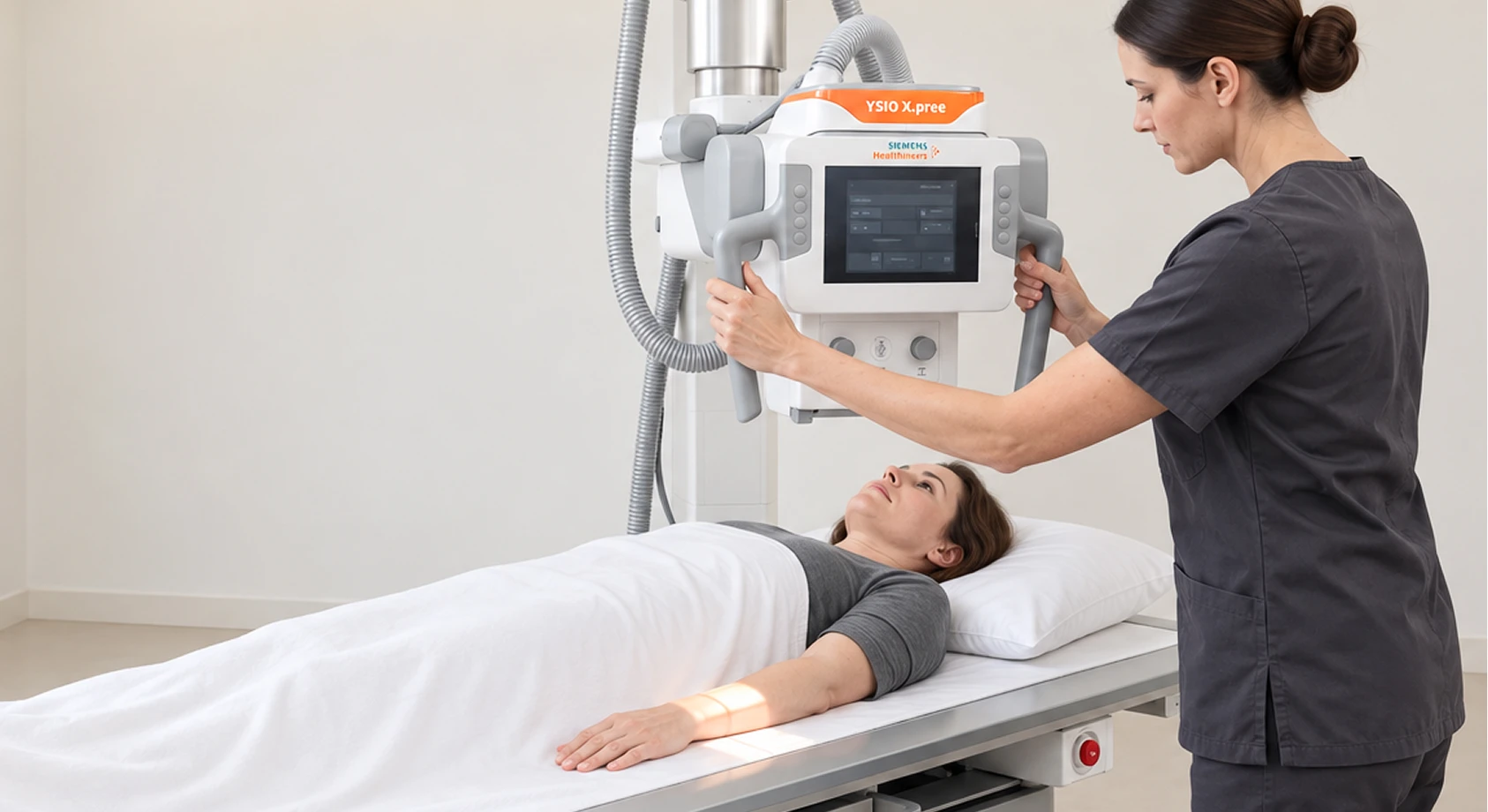
Examination precedes any imaging. The consultant takes a full history and examines you without time constraint, assesses movement and gait, and performs diagnostic ultrasound during the consultation on the Canon Aplio i800. Magnetic resonance imaging on the Siemens MAGNETOM Sola, plain radiography, bone density by dual-energy X-ray absorptiometry and laboratory investigation are then chosen to answer the question the examination has raised, and the diagnosis is explained before treatment is discussed.
Spine
Neck and back pain, sciatica and radicular pain, disc disease, facet joint and sacroiliac pain, and spinal stenosis are managed without surgery wherever that is achievable. The department combines prescribed rehabilitation with image-guided injection where it will shorten the course and refers for surgery only where the diagnosis and the failure of non-operative treatment both indicate it, to a named spinal surgeon.
Upper and lower limb
The department diagnoses and treats the conditions of the shoulder, elbow, wrist and hand, and of the hip, knee, foot and ankle. This includes rotator cuff disease and impingement, frozen shoulder, instability, tennis and golfer’s elbow, carpal tunnel syndrome, tendinopathy and trigger finger; hip and groin pain, gluteal tendinopathy, meniscal and ligament injury, patellofemoral pain, Achilles and plantar heel pain, and ankle instability. Each is examined and imaged at the consultation, and most are treated here with injection, rehabilitation or regenerative therapy, with referral for surgery where the injury requires it.
Sports and exercise medicine
Injury in sport is assessed alongside the load and the technique that produced it, since treating the injury without addressing its cause invites its return. The department assesses acute injury, overuse and load-related injury, and bone stress injury, provides pre-participation screening, and judges return to sport against measured recovery rather than the calendar. For injuries in which a return to sport without surgery is the aim, regenerative injection using your own tissue is available through lipogem injections. Relative energy deficiency in sport, in which training exceeds what the body is fuelled for, is recognised and managed with Endocrine medicine and a dietitian.
Joint preservation and injection therapy
Joint replacement is delayed, and where possible avoided, by treating osteoarthritis early and well. The department stages the joint, manages load and prescribes exercise, treats the weight and metabolic factors that accelerate the disease, and assesses bracing and orthotics. Injection therapy is undertaken under ultrasound guidance, using: corticosteroid, hyaluronic acid, platelet-rich plasma and hydrodilatation, and aspiration and nerve or soft tissue injection where indicated. Where a joint may benefit from your own bone marrow concentrate or micro-fragmented fat (lipogems), the procedure is performed with regenerative and longevity medicine, and referral for replacement is made at the stage at which it will do the most good.
Rehabilitation and movement
Rehabilitation is prescribed in writing and reviewed at defined intervals, so that recovery is planned and measured rather than left to happen. The department provides post-injury and post-operative rehabilitation, strength and conditioning, and movement retraining, and addresses the mechanics that underlie recurrent presentation through gait assessment, foot and ankle biomechanics, orthotic prescription and footwear assessment. Physiotherapy and podiatry work together here, since a knee that keeps presenting is often a foot that has never been assessed.
Pain management
Persistent musculoskeletal pain is assessed and treated as a condition in its own right. The department provides pharmacological management and interventional procedures, and where pain has become established beyond the injury that began it, refers to a specialist pain service, with your consultant remaining involved and the full record of what has been tried sent ahead.

