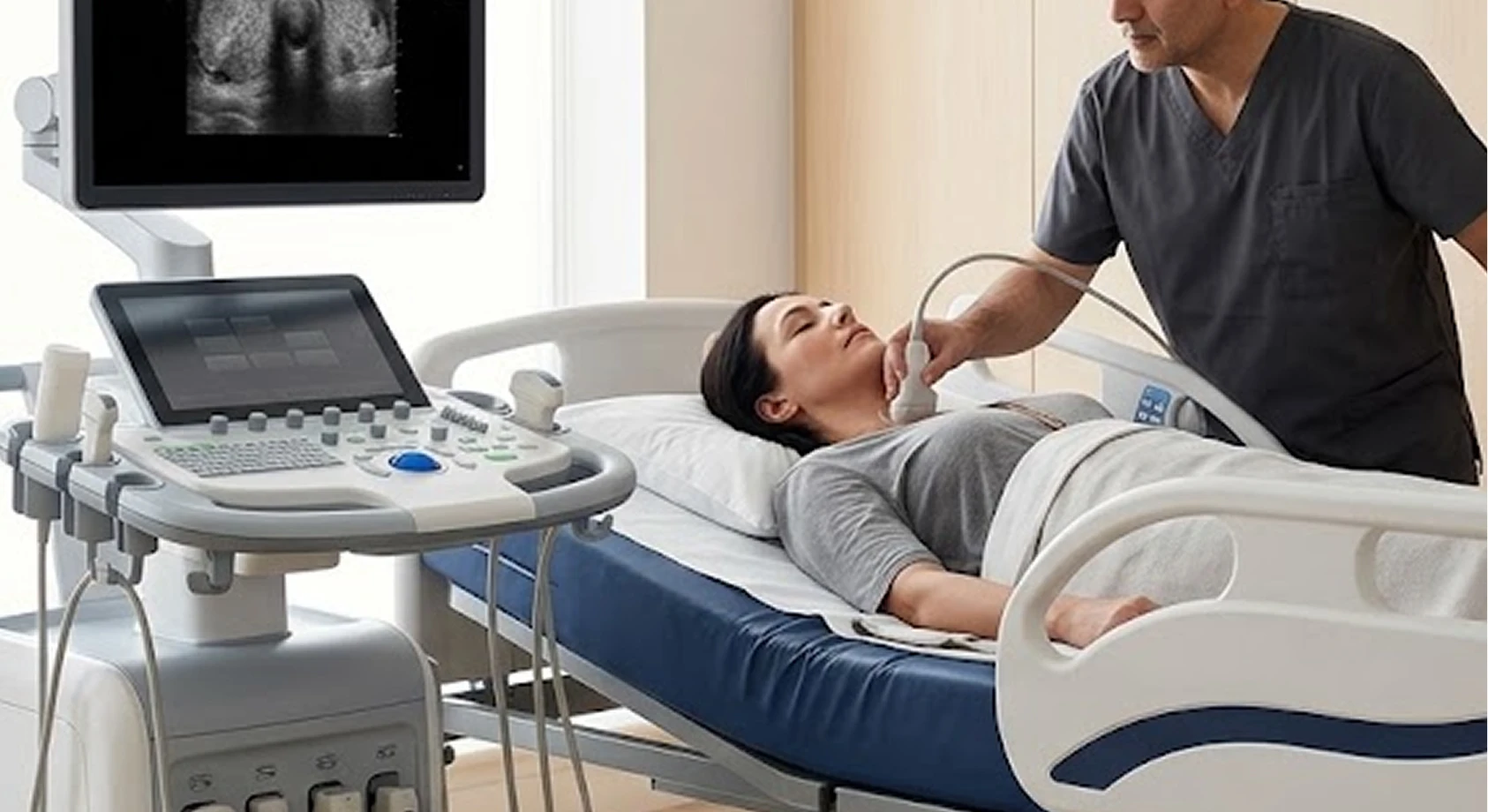
Thyroid
Thyroid disease is common, and its treatment is only as good as the assessment behind it. The department measures the full axis rather than a single hormone, examines the gland by ultrasound on the Canon Aplio i800, and characterises any nodule at the same visit, so that hypothyroidism, hyperthyroidism and subclinical disease are each treated to what is actually found, including where symptoms persist on existing treatment.
Adrenal
Adrenal conditions produce symptoms that are easily attributed to other things, and they are readily treated once found. The department profiles cortisol across the day, which a single sample cannot do, investigates the incidental adrenal findings that imaging increasingly reveals, and, with cardiovascular specialists, seeks the adrenal causes of high blood pressure.
Pituitary
The pituitary governs the thyroid, the adrenals and the gonads, and disease within it can present through any of them. The department assesses the axis as a whole, uses dynamic testing where a single measurement cannot settle the question, and interprets any pituitary lesion with a neuroendocrine specialist, referring onward with the assessment complete where treatment lies elsewhere.
Metabolic and diabetes
Metabolic disease is identified here while it is still reversible. Insulin resistance is measured directly, years before glucose becomes abnormal. Diabetes and prediabetes are managed, and obesity is treated as the medical condition it is, with pharmacological treatment where indicated. The liver and visceral fat, where metabolic disease first shows, are measured by elastography and densitometry.
Bone and calcium
Bone density is a measurement, not a diagnosis. The department investigates what lies behind a low result before treating it, since hyperparathyroidism and other endocrine causes of bone loss are curable. We deliver treatments to correct vitamin D deficiency, and for osteoporosis. Osteoporosis and osteopenia are assessed on the GE Lunar iDXA, with fracture risk calculated against your history.
Hair thinning and loss
Hair loss more often has an endocrine or nutritional cause than is generally supposed, and those causes can be treated. The department investigates thyroid, iron and androgen status together, and where the pattern is unclear undertakes trichoscopy with dermatology specialists. Regenerative treatment to the scalp comes through the Aesthetic medicine department, home of the latest longevity treatments including PRP, exosome therapy and stem cell derived therapies.
Sleep and fatigue
Persistent fatigue is treated as a diagnosis to reach, not a symptom to accept. The department investigates its endocrine causes systematically, from the stress axis and the thyroid to iron and the sex hormones. Assessment is done of sleep itself, since sleep apnoea is among the most common causes of daytime exhaustion and among the most treatable.
Mood and emotional health
Low mood, anxiety and loss of drive are assessed for a hormonal cause before being assumed to be psychiatric, because thyroid, cortisol and sex hormone disorders produce all three and each is correctable. Where the picture is not endocrine, the department refers for psychological support with the hormonal findings already in hand.
Laboratory
Steroid hormones are measured by immunoassay and mass spectrometry, for efficient and accurate diagnosis. Dynamic function testing, diurnal cortisol profiling and bone turnover markers are performed, with results reviewed by your consultant without unnecessary delay.

