Medical dermatology
The skin concerns are expertly examined and diagnosed before they are treated. The common conditions treated are acne, rosacea, eczema and dermatitis, psoriasis, urticaria, and pigmentary disorders including melasma. The consultant examines the skin under dermoscopy, takes a biopsy for histological analysis where the picture is unclear, and treats to a diagnosis with topical, systemic, light-based or laser therapy as the condition warrants, reviewing the result against photographs taken to the same standard each time.
Skin cancer and mole surveillance
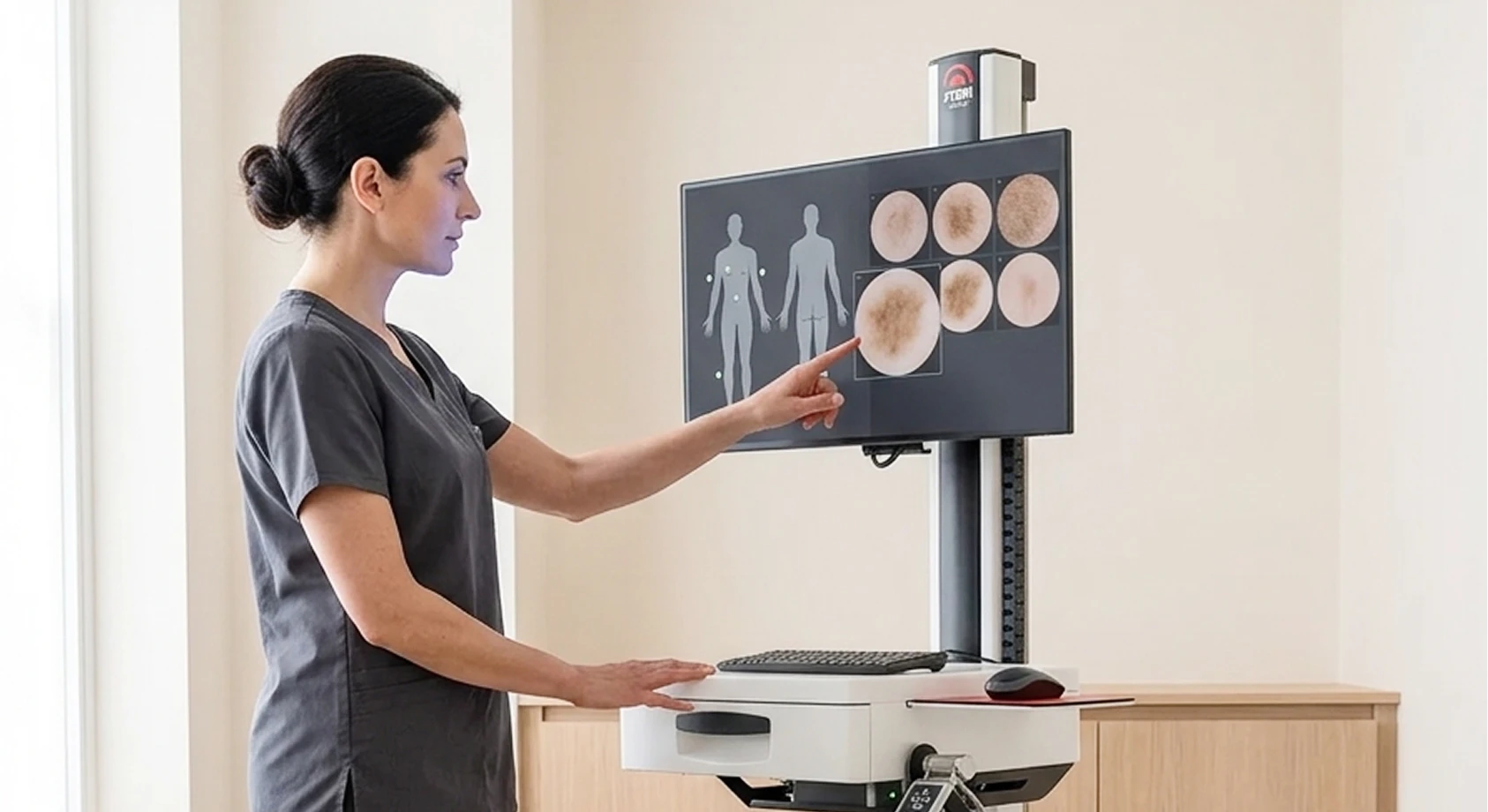
Skin cancer is among the most curable cancers when found early, so the department specialises in preventive care. Every patient receives a full skin examination with dermoscopic assessment of each lesion of interest, and the whole skin is recorded by total body photography with sequential digital dermoscopy on the FotoFinder ATBM master with Medicam 1000. At every subsequent visit a lesion is judged not only on how it looks but on whether it has changed. Suspicious lesions are excised here and sent for histology, actinic damage is managed before it progresses and any suspected malignancy beyond the department’s scope is referred to a named specialist without delay.
Skin of colour
Deeply pigmented skin responds differently to disease, to treatment and to injury, and carries a higher risk of pigmentary complication from both. The department has comprehensive experience in this specialism. Melasma and post-inflammatory hyperpigmentation, keloid and hypertrophic scarring, pseudofolliculitis barbae and traction alopecia are diagnosed and treated by consultants experienced in pigmented skin.
Hair and nail disorders
Hair loss and nail disease are investigated for their cause rather than treated topically, because the cause, autoimmune, hormonal, nutritional, infective or inherited, determines what will work. The scalp is examined by trichoscopy, blood investigation covers thyroid, iron and androgen status, and biopsy is taken where the pattern is unclear, distinguishing alopecia areata, androgenetic alopecia, scarring alopecia and telogen effluvium from one another. Nail dystrophy and infection are diagnosed with sampling where needed. Treatment follows the diagnosis, with autoimmune specialists where the cause is immune and aesthetic medicine where regenerative therapy to the scalp is indicated.
Inflammatory skin disease
Where the skin reflects a wider condition, the department assesses the whole. The cutaneous manifestations of autoimmune disease, hidradenitis suppurativa, lichen planus and lichen sclerosus, and cutaneous drug reactions are each diagnosed by examination and histology and investigated for the systemic disease they may signal. Treatment ranges from topical therapy to referral for biologic therapy, with the department remaining responsible for the skin throughout.

